
At 1,818 meters, Pico do Arieiro combines easy road access with a demanding mountain trail. We found crowds and closures, but scenery worthy of the hype.
Understanding Pico do Arieiro
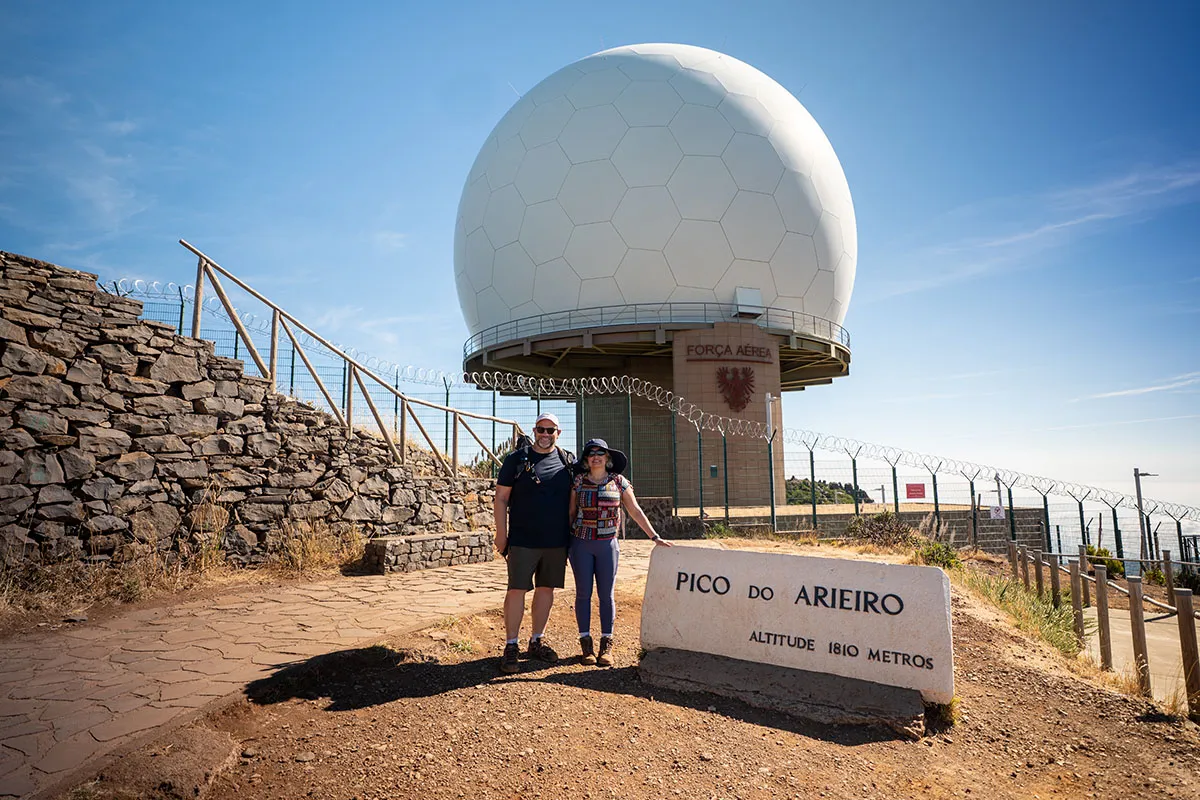
At 1,818 meters, Pico do Arieiro (officially Pico do Areeiro in European Portuguese) is Madeira’s third-highest point. Only Pico Ruivo at 1,862 meters and Pico das Torres at 1,851 meters are higher.
Arieiro is the most popular because you can drive almost to the summit. There is a paved road, parking and a restaurant. It is also the starting point of PR1 Vereda do Areeiro, the famous route connecting Arieiro to Pico Ruivo.
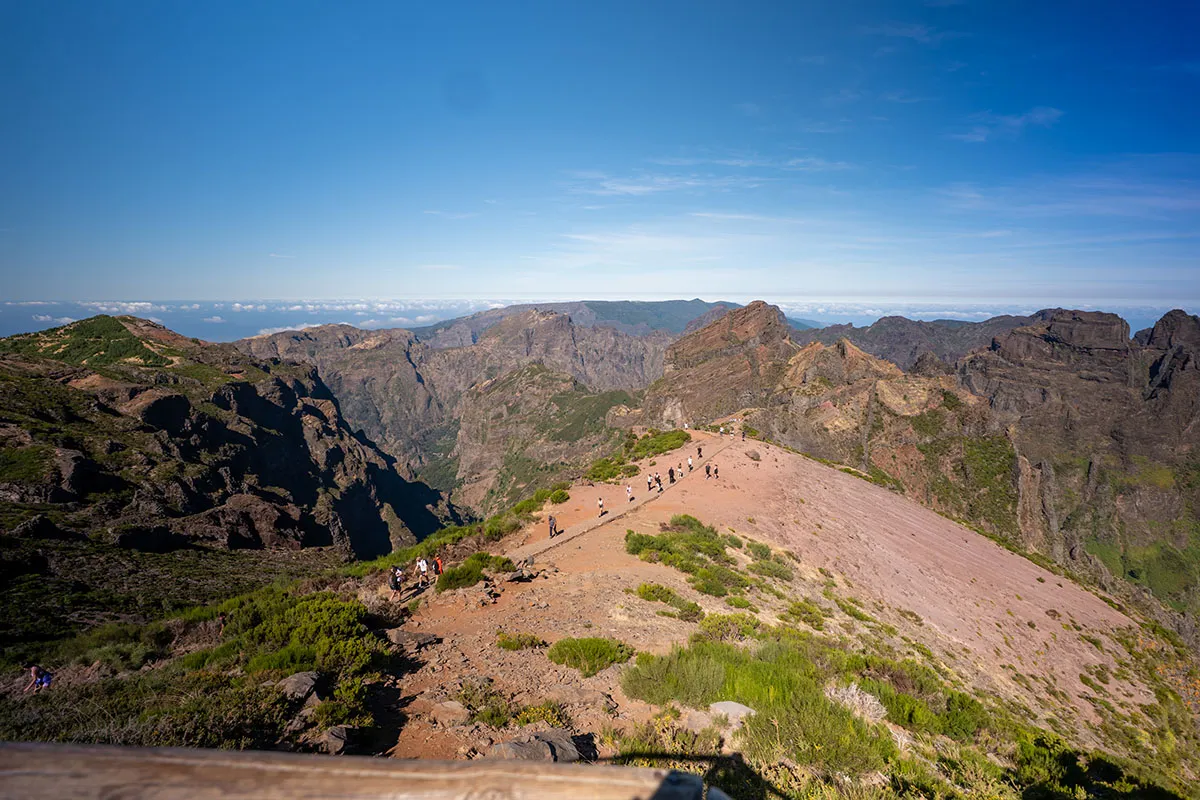
Madeira distinguishes between veredas, official mountain trails with steep climbs and exposed terrain, and levadas, paths following irrigation channels that are usually gentler. PR1 is a vereda and requires fitness, endurance and attention.
Access and parking
Pico do Arieiro is around 30 km or 30–40 minutes from Funchal. The road is paved but narrow and winding, particularly demanding in fog or darkness.
There are two paid parking areas. We paid €5 at the more distant lot and could leave the car all day. From there, visitors can walk up or take a shuttle. We did not notice the shuttle and started our “CrossFit” session immediately.
We were lucky to find a space. For sunrise, staying nearby or booking a transfer is safer than driving an unfamiliar mountain road before dawn.
A closed trail and Pedra Rija frustration
Our theoretical goal was the classic route to Pico Ruivo. Realistically, given our late arrival and average fitness, we hoped to reach at least the first tunnel.
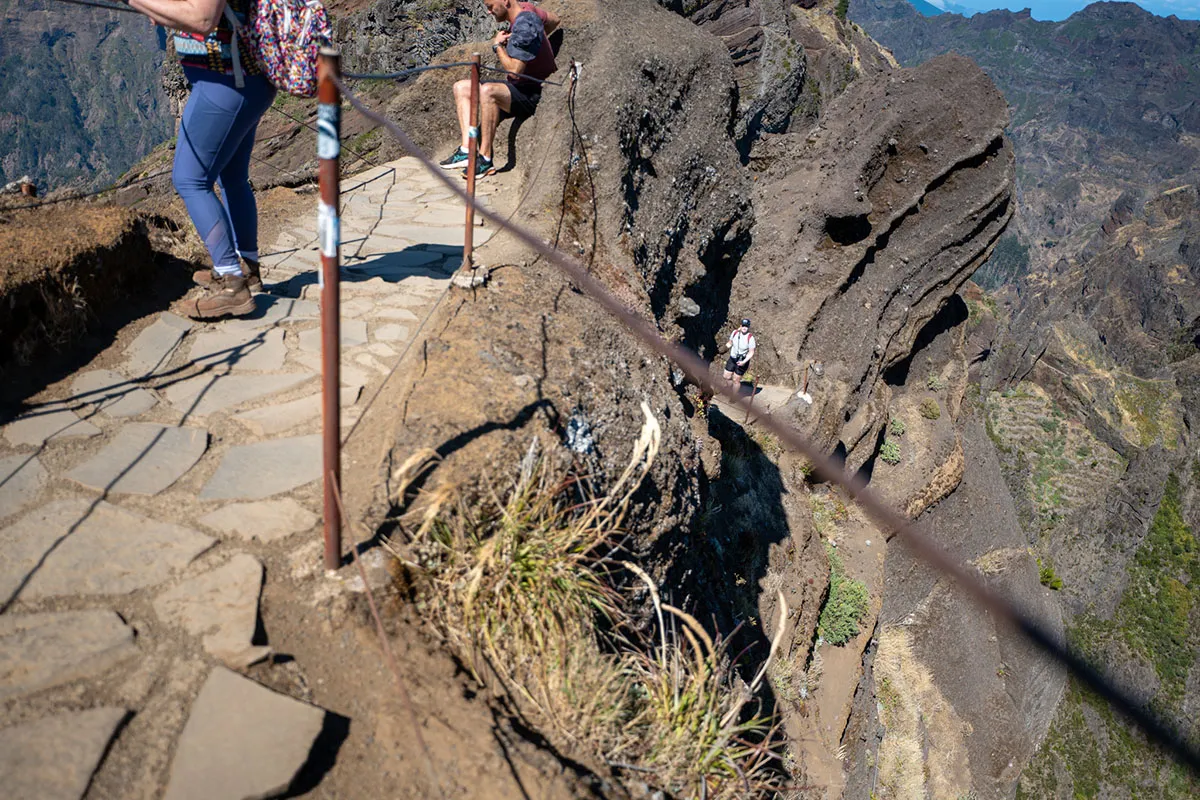
The trail was closed beyond Pedra Rija, so Pico Ruivo was impossible. Even so, the roughly four kilometers we completed tested us with endless stairs, midday sun and altitude. It was enough challenge for two fifty-somethings who still like to imagine they are thirty.
This is not a beginner trail
Unlike an easy levada, PR1 demands good physical preparation. We moved slowly and stopped for photographs. Clear skies, heat and clouds created excellent views.
Crowds are part of the experience. We watched one woman descend steep, unguarded stairs at 1,800 meters with a drink in one hand and a phone in the other, filming without watching her feet. That scene summarizes modern Arieiro: part mountain trail, part major tourist attraction, complete with paid lots, souvenir shops, restaurant and tour buses.
Where we ate afterward
On the way back to Funchal, we stopped at Abrigo do Poiso Restaurant. We first pulled over for photographs of the surrounding trees and discovered friendly service, fair prices and enormous portions.
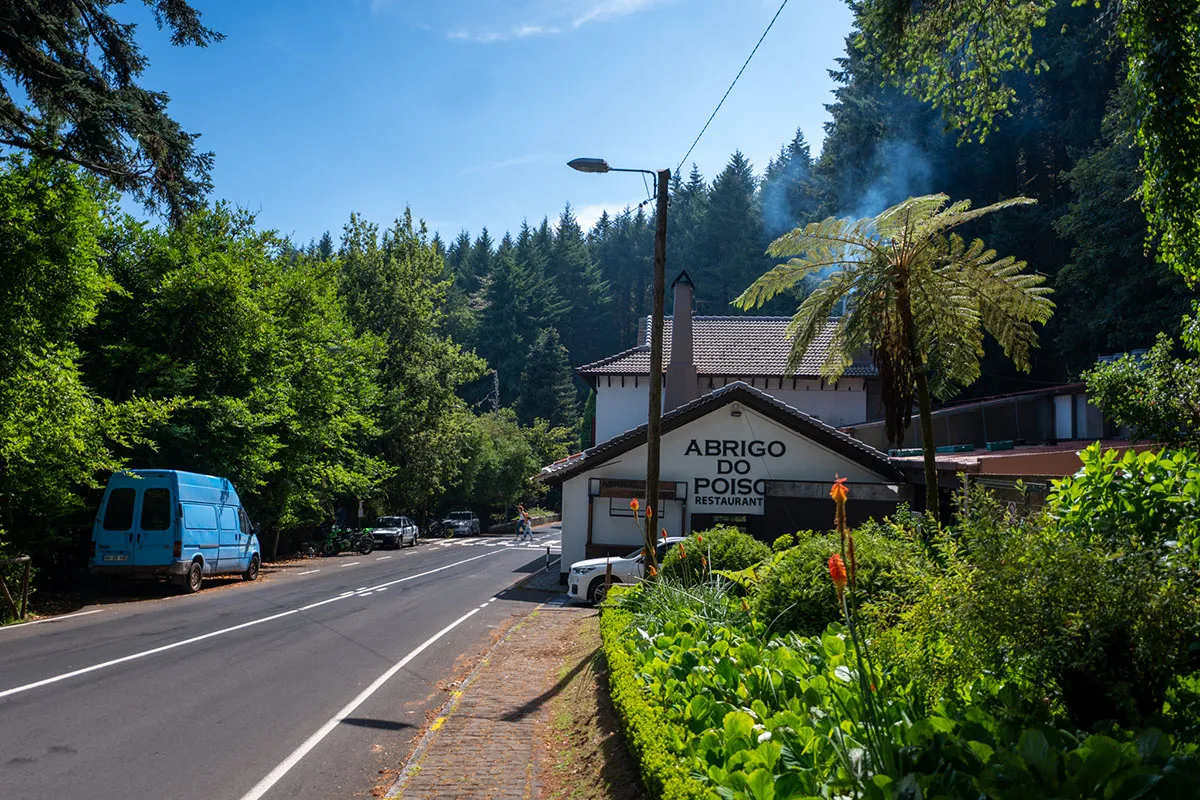
Our €30 mixed-meat platter came with rice, beans and potatoes and could easily feed four. A poncha, Madeira’s traditional drink, completed the recovery meal. The rustic mountain atmosphere and simple local food make this a very good final stop.
What sunrise taught us
We did not do our homework. Sunrise or sunset above the clouds is Arieiro’s signature experience. If that is your priority, pay for a transfer or sleep close to the mountain. The dark, winding road is not where I would improvise.
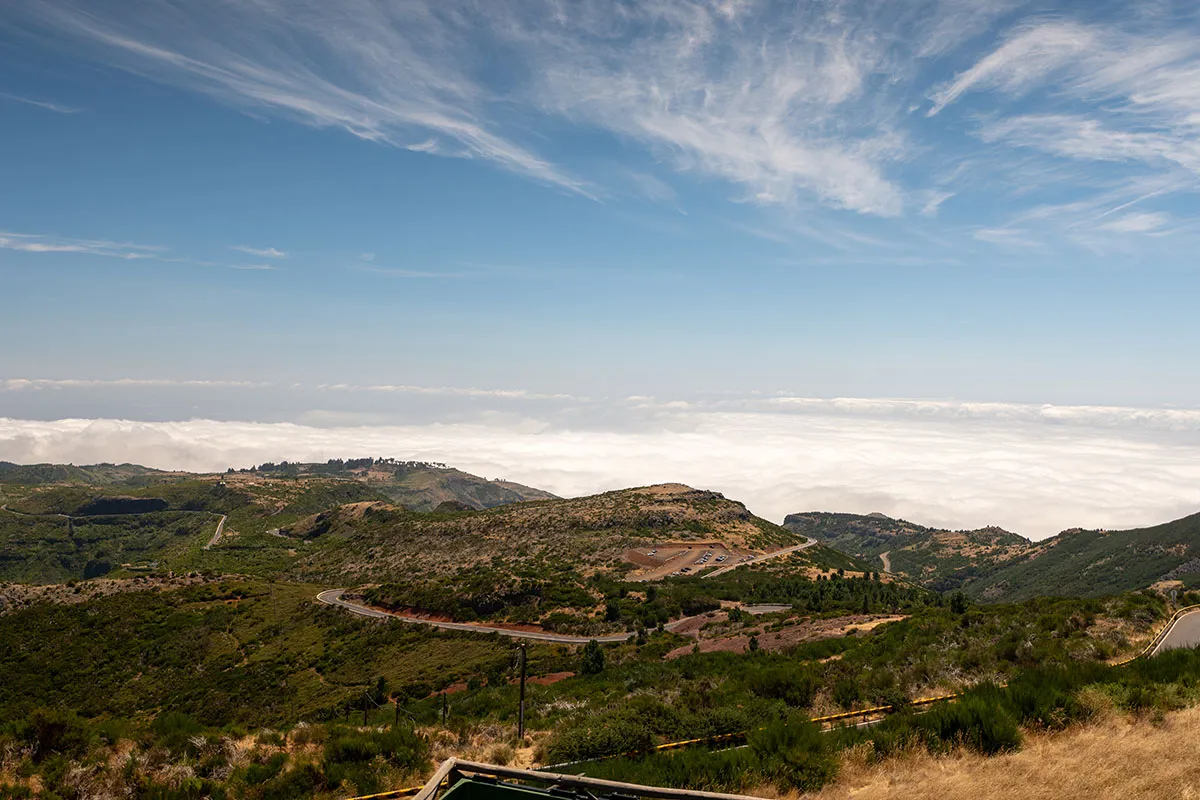
We arrived between 9 and 10 a.m., like many other visitors, and left around 3 p.m. Even without golden hour, the sea of clouds appeared on the drive up and the summit views delivered.
Would we return for sunrise?
Yes. This was the Madeira trail where we most regretted missing sunrise. On another visit, I would make the effort and hope that the route to Pico Ruivo was fully open.
Verdict
Even with the closure and no golden hour, Pico do Arieiro is an essential Madeira experience. You can make a short visit to the viewpoint or tackle the longer mountain route, but do not confuse road access with an easy hike. The crowds are real and the Instagram hype is powerful, yet the views genuinely justify the attention.
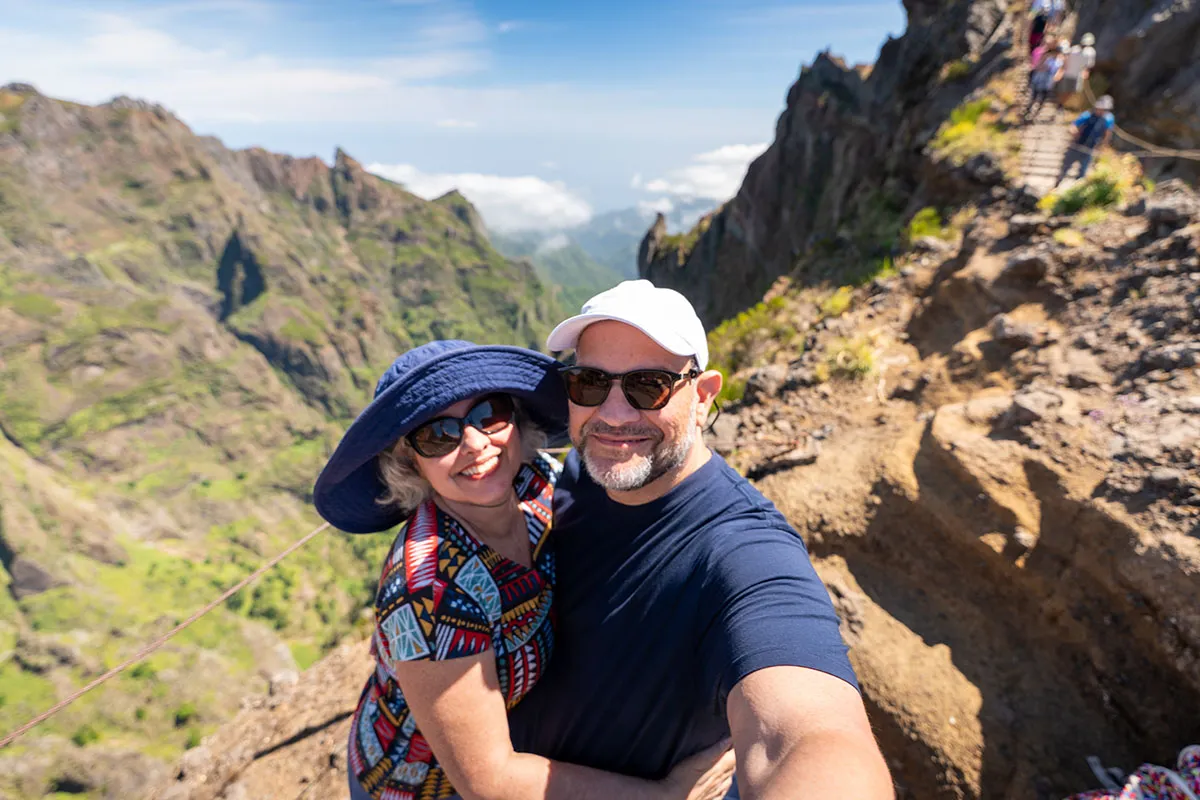
🌎 Have a great trip, and see you on the next adventure!
Read also
Was this post useful?
Rate your reading experience.