

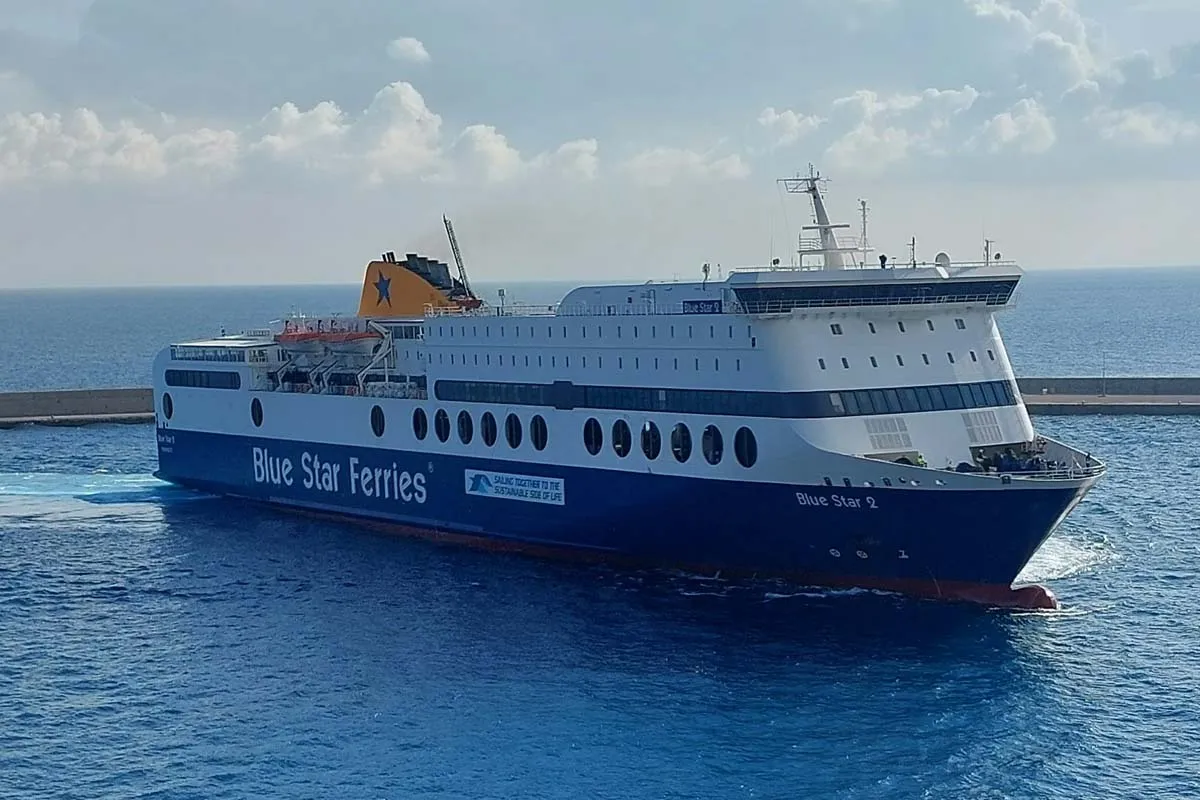
After travelling between Athens, Milos, Paros and Crete, we learned when Greek ferries are convenient and when they add unnecessary time and stress.
Slow ferries versus fast ferries
Conventional ferries are large, slower and generally more stable. They carry vehicles and provide decks, lounges and cafés. High-speed ferries reduce travel time but cost more, offer less outdoor space and can feel rougher in strong wind.
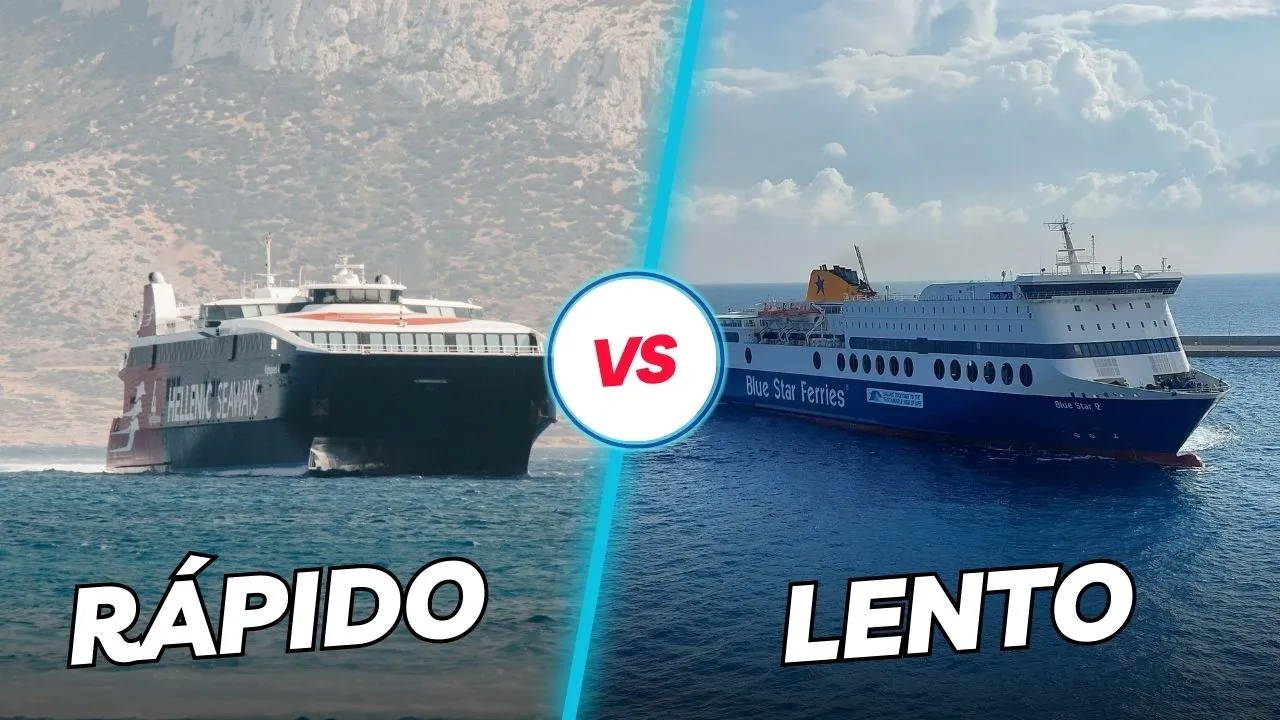
For a short Cyclades crossing, speed may justify the premium. For a long trip or travellers sensitive to motion, the larger ship can be the better experience.
Prices and booking strategy
Fares depend on operator, route, season, vessel and seat class. Greek ferry prices do not always behave like airline fares, but popular summer sailings can sell out.
Book once the route is stable, especially with a vehicle or in July and August. Avoid creating a chain of non-refundable reservations around a fragile same-day connection.
Ticket and comfort options
Choices range from deck or economy seating to numbered aircraft-style seats, business lounges and cabins. A reserved seat is useful on busy or overnight routes. Cabins make sense when they replace a hotel night.
Booking process
Search route aggregators to understand the schedule, then compare the operator’s official price and conditions. Confirm the port because Athens has Piraeus, Rafina and Lavrio, which are not interchangeable.
Digital tickets are increasingly common, but save them offline. Some operators still require check-in or ticket conversion.
Our experience
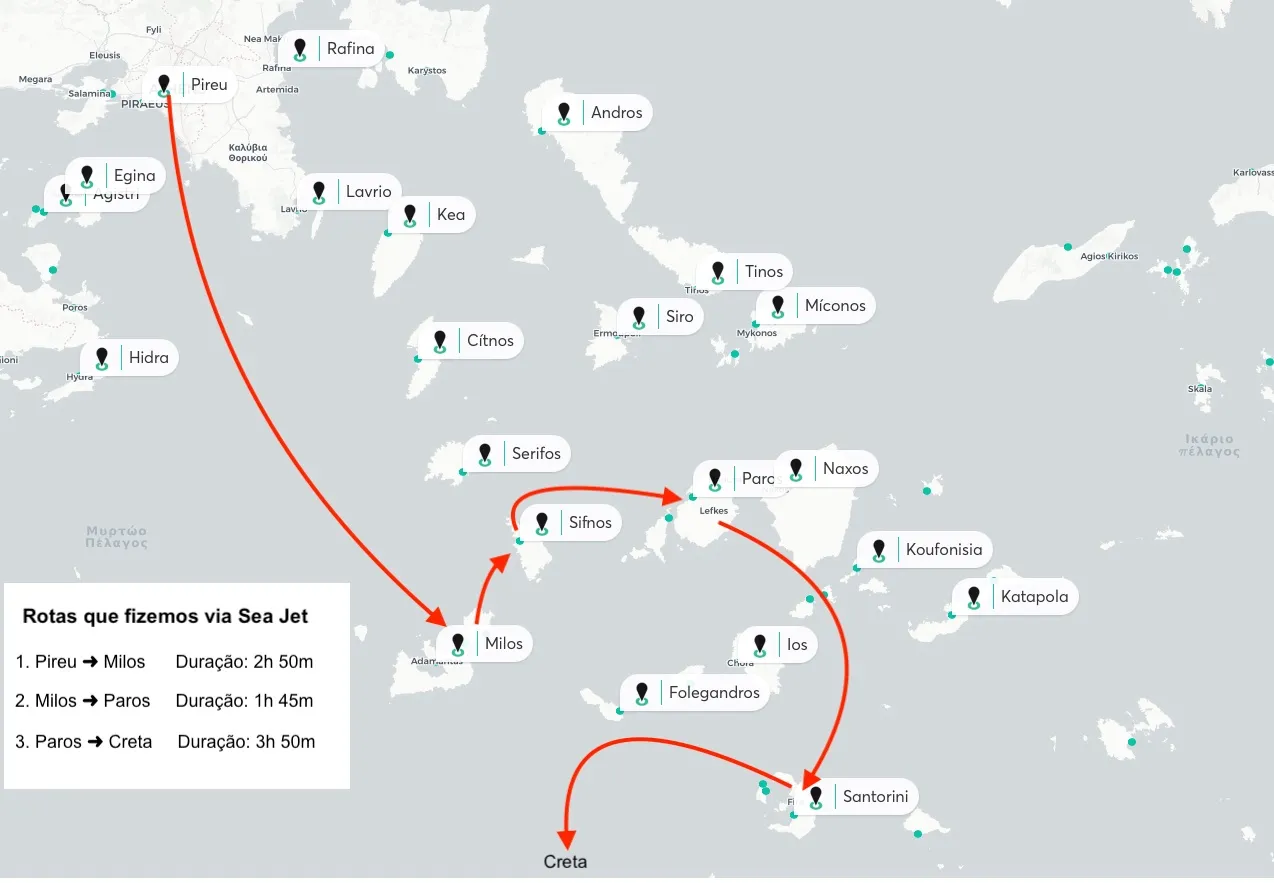
We used ferries across a route involving Athens, Milos, Paros and Crete.
Comfort
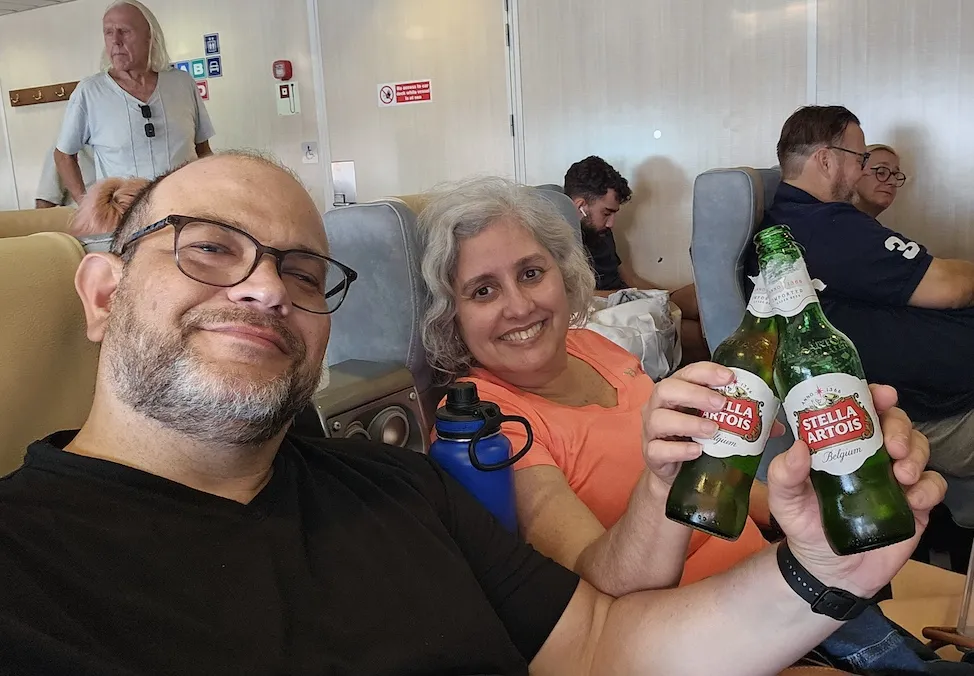
The vessels were modern, but crowds and luggage areas created stress. Fast ferries felt more like enclosed transport than a scenic cruise.
Speed
Scheduled duration is only part of the story. Boarding delays and intermediate island stops can extend the day.
Seasickness
The Aegean can be rough, particularly under Meltemi winds. Take medication before departure if advised, sit near the center and look toward the horizon when possible.
Views
The strongest scenery usually appears during the final approach to each island. Much of the crossing is open sea.
Practical ferry tips
Before departure
- Confirm the port and terminal.
- Check operator messages for delays.
- Arrive early, especially with a car.
- Carry water, medication and essentials outside checked luggage.
Boarding
Boarding can be fast and chaotic. Follow crew instructions and keep children close.
Luggage
Large bags normally remain in racks on a vehicle deck. Keep documents, electronics and valuables with you, and label every bag.
On board
Locate your assigned seat, avoid blocking corridors and do not count on strong mobile service.
Arrival
Be ready before docking because disembarkation is quick. Arrange transfers in advance on smaller islands.
When should you choose a ferry?
Choose it for direct island-to-island routes, flexible luggage, vehicle transport and itineraries with enough time. Choose a flight when the ferry requires a very long crossing, the schedule creates a risky connection or seasickness is severe.
Frequently asked questions
Can pets travel?
Yes, under operator and EU rules. Documentation, carrier and designated pet areas vary.
Where can I sleep?
Long-distance ships may offer cabins. Never assume ordinary lounge seats permit comfortable overnight sleeping.
Can I take a car?
Many conventional ferries do, but vehicle space must be reserved and rental-company permission is essential.
How do I track the ferry?
Use operator updates and marine-tracking services, but treat estimated arrival as variable.
When is the season?
June through September has the most routes and crowds. October through March has fewer services and more weather disruption. April–May and September–October can offer a good balance, but schedules remain thinner than peak summer.
Final recommendation
Ferries are fundamental to Greek-island travel, but they are not automatically romantic or efficient. Match vessel and route to your time, luggage and tolerance for waves, and never place a tight international-flight connection immediately after a long sailing.
Read also
- Chania: The Venetian Side of Crete That Won Us Over
- Preveli Beach: Everything You Need to Know Before Visiting
- A Perfect Day in Northern Milos: A Road Trip for Couples
- Paros in 2 Days: Is Greece
- Renting a Car in Greece: The Complete Milos, Paros and Crete Guide (2026)
- Renting a License-Free Boat in the Greek Islands: Step by Step
- Greece: Flights and Airports Guide
- Greek Islands: Flights vs Ferries, Which Is Better?
Was this post useful?
Rate your reading experience.